Showing posts with label James Norcliffe. Show all posts

Friday, 26 June 2015

The Origins of the Loblolly Boy series

Image result for The Pirates and the NightmakerTHE PIRATES AND THE NIGHTMAKER
James Norcliffe,
Longacre [Penguin Random House],
paperback, 303 pages,
NZ$20

 A glance at Donovan Bixley’s dramatic cover picture is enough to reveal that in The Pirates and the Nightmaker, James Norcliffe has returned to the fantastic world of The Loblolly Boy (2009) and The Loblolly Boy and the Sorcerer (2011). Yet, this is a prequel, not a sequel.
 
In 1740 Jeremy is the surgeon’s boy – known, of course, as the loblolly boy - on a British warship. Cast adrift in a small boat in the doldrums, Jeremy is in danger of being eaten by his starving crewmates, but instead is rescued by an enigmatic dark stranger, Mr Wicker, who has the power to change Jeremy into the invisible flying boy of the earlier stories. 
 
Jeremy’s power of flight enables him to guide Wicker and the other survivors to a privateer, the Medusa, captained by the fearsome Jenny Blade. What follows is an exciting pirate adventure, complicated by the fact that nobody can see or hear Jeremy – except Sophie, the Captain’s daughter. This brilliantly written adventure, rich in historical detail, has a delightful surprise in its ending.

Trevor Agnew

 This review was first published on 28th March 2015


Tuesday, 17 September 2013


NZ Young People’s Books: Best of 2012
By Trevor Agnew 
Published in Your Weekend Magazine, (The Press, Christchurch, New Zealand, Nov 2012)  


Best Books for Kiwi Youngsters: 2012
Publishing trends 2012
 
By Trevor Agnew   

2012’s most heart-warming publishing event was the return of a once famous imprint. Whitcoulls, under its new ownership, has returned to publishing with a magnificent hardback anthology of New Zealand stories and poems, Read Me Another One, Please! selected by Belynda Smith. Authors include Margaret Mahy, Roger Hall, Joy Cowley and Bill Nagelkerke. The best story is Granny Alex, by Tessa Duder, where a young woman swimmer, training for the Olympics, is encouraged by her grandmother. Satisfyingly, Tessa Duder’s beloved classic Alex (1987) is being re-issued by Whitcoulls Classics.

The darkest aspect of 2012 was undoubtedly the death of Margaret Mahy, a brilliant writer, whose high level of creative genius remains unequalled. Margaret’s unique way with language can be sampled in the new paperback edition of her collected verse, The Word Witch, which has a CD of her reading a dozen of the poems.  

Meanwhile Margaret’s prolific output means that her titles continue to appear posthumously. Footsteps in the Fog is an atmospheric celebration of the senses, with a blind girl leading her siblings to safety through dense fog. Mr Whistler is a gleeful picture book about an absent-minded
dancer who mislays his train ticket and has to undress on the station platform to find it (much to the joy of young readers). Both these books are illustrated by Gavin Bishop. It has been an excellent year for Bishop, whose Counting the Stars: Four Maori Myths has just appeared in paperback, while his 1999 masterpiece, The House that Jack Built, has been re-issued in a sumptuous hardback, a reminder of just how important good illustration and book design are.

 In November 2012, the German firm, Bertelsmann, owner of Random House, took over the British firm Pearson, owner of the various Penguin imprints. The promise is that Random House and Penguin will retain their distinct editorial identities. The concern, however, is that as the big firms swallow each other up, fewer books for young people will be produced. Ray Turton, editor of Magpies magazine, which reviews Australian and New Zealand books for young people, feels that over recent years “big publishers don’t know where their industry is going. They’ve been running round like hens with their heads cut off.” Turton warns that large corporations will always concentrate on mass-market books with larger print runs. “Everyone wants the next Hunger Games or Harry Potter.”

New Zealand has a proud tradition of small publishing firms producing high quality books for the young.  In its thirty years of existence, the tiny Wellington publishing firm of Mallinson Rendell produced only about seven titles a year, but the remarkable quality of publisher Anne Mallinson’s judgement was reflected in book prizes and export orders.  When Mallinson Rendel closed its doors in 2009, its titles were purchased by Penguin. Lynley Dodd’s menagerie of cats and dogs thus migrated to Puffin, which has just issued the witty Slinky Malinki, Early Bird. Yet, even though the future of Hairy Maclary and his friends is now assured, would such a long-running series have been brought into existence and nurtured without the support of a visionary like Anne Mallinson?

Longacre Press, the small Dunedin publisher co-founded by Paula Boock, was another small firm that punched above its weight. Taken over by Random House in 2009, Longacre still appears as an imprint on novels like James Norcliffe’s The Magic Flute, a fantasy that pitches modern Kiwi kids into Arcadia. Another Longacre title is Kate De Goldi’s The ACB with Honora Lee, the superbly-presented story of a girl coming to terms with her grandmother’s dementia.

The good news is that new ‘little’ publishers keep popping up.  Several well-designed picture books have come from the Duck Creek Press, a branch of David Ling Publishing, including the stylish That Dog at the Beach by Janene Cooper and Evie Kemp (a sequel to their award-winning A Dog Like That).

Another recent arrival, Dreamboat Press, is a husband and wife operation, based on Waiheke Island. Mark and Rowan Sommerset have only produced five picture books so far but have already won awards. Their latest, I Love Lemonade, has the slightly naughty flavour that young readers adore.

All publishers need a point of difference to survive.  Wellington’s Gecko Press has concentrated on providing English language translations of award-winning foreign titles, both non-fiction, such as the French Small and Tall Tales of Extinct Animals, by Hélène Rajcak, and fiction, such as the hilarious Swedish illustrated story The Best Singer in the World by Ulf Nilsson.

 Huia Publishers focuses on Māori titles, and their young people’s books this year include such lively war biographies as Born to Fly (about Johnny Pohe) and Victory at Point 209 (Moana Ngarimu), both illustrated by Andrew Burdan in war-comic style.  Huia also a shrewdly reversed Gecko’s technique, by producing Te Haere ki te Rapu Pea, a Maori language version of Michael Rosen’s 1989 classic, We’re All Going on a Bear Hunt, evocatively illustrated by Helen Oxenbury.

Some publishers find that series help ensuring repeat custom. Little girls adore Elizabeth Pulford’s Littlest Angel series, where Lily Gets in a Pink Pickle is the sixth volume. Kyle Mewburn’s cheerfully anachronistic Dinosaur Rescue series reached Number 7 with Scuto-Stickysaurus. Meanwhile Chris Gurney’s up-dated fairy tale, The Frog Footy Player is the 14th in the Kiwi Corkers series.

Some publishers give books special features to encourage buyers. Jenny Cooper’s splendid picture book, Do Your Ears Hang Low?, includes a CD of the Topp Twins performing the song (as a sequel to the same team’s 2011 version of There’s a Hole in My Bucket). Pio Terei is the vocalist on the CD which comes with Stevie Mahardika’s If You’re a Kiwi and You Know It. Several books now offer stuffed toys, like Craig Smith’s Willbee the Bumblebee. The Wonky Donkey meanwhile goes one better; as well as a stuffed toy, it now offers a miracle of paper engineering, The House that Wonky Built. Junior engineers who enjoy the classic, The Little Yellow Digger by Betty and Alan Gilderdale, can now own a trace ‘n’ race excavator toy version, which comes complete with the book. There’s even The Little Yellow Digger Activity Book.

As the publishing market-place shrinks, many frustrated, would-be writers try printing and selling their own books. Some of their efforts are dire but a few are excellent, like Brent Leslie’s self-published Jock Logan and the Sea Devil, a vivid account of a lad’s seagoing encounter with Count von Luckner.  Craig (Wonky Donkey) Smith created his own company in Queenstown to publish Kaha the Kea, illustrated by Bruce Potter. Like many other publishers, Craig feels the need to bring electronic media and the printed page together. Thus purchasers of Kaha the Kea can also enjoy an animated version on their iPad or computer.

And which of this year’s books will the young readers of 2062 be reading with pleasure?  My pick is David Hill’s best novel yet, a powerful story of dissent and its consequences, My Brother’s War.  The year’s best picture book also deals with the First World War: Glyn Harper’s handsome and moving Le Quesnoy: the story of the town that New Zealand saved, illustrated by Jenny Cooper.

Trevor Agnew
November 2012  

Book list: The Best of 2012:


Le Quesnoy: the story of the town that New Zealand saved, Glyn Harper, ill Jenny Cooper, Scholastic, NZ$20
My Brother’s War, David Hill, Puffin, pb, NZ$19.99
 

The Top Two Dozen of 2012:

Slinky Malinki, Early Bird, Lynley Dodd, Puffin, hb, NZ$24.99

Mr Whistler, Margaret Mahy, ill Gavin Bishop, Gecko, hb, NZ$34.99

Kaha the Kea, Craig Smith, ill Bruce Potter, Craig Smith Publishing, pb, NZ$26

If You’re a Kiwi and You Know It, Stevie Mahardika, Scholastic, pb, NZ$21

The Little Yellow Digger Activity Book, Scholastic, pb, NZ$10

Do Your Ears Hang Low?, ill Jenny Cooper, Scholastic, pb, NZ$26

That Dog at the Beach, Janene Cooper, ill Evie Kemp, Duck Creek Press, hb, NZ$29.99

Te Haere ki te Rapu Pea, Michael Rosen, ill Helen Oxenbury, Huia Publishers, pb, NZ$20

 I Love Lemonade, Mark & Rowan Sommerset, Dreamboat Press, hb, NZ$29.99

The House that Wonky Built, ill Katz Cowley, Scholastic, hb, NZ$29

The Best Singer in the World, Ulf Nilsson, ill Eva Eriksson, Gecko, hb, NZ$34.99; pb, NZ$19.99

The Littlest Angel 6: Lily Gets in a Pink Pickle, Elizabth Pulford, Scholastic pb, NZ$12

Dinosaur Rescue 7: Scuto-Stickysaurus, Kyle Mewburn, Scholastic, pb, NZ$12

The Frog Footy Player, Chris Gurney, ill John Bennett, Scholastic, hb, NZ$18.50

Footsteps Through the Fog, Margaret Mahy, ill Gavin Bishop, Puffin, pb, NZ$20

Small and Tall Tales of Extinct Animals, Hélène Rajcak & Damien Laverdunt, Gecko, hb, NZ$37

The Word Witch, Margaret Mahy, ill. David Elliot, HarperCollins, pb, NZ$40

Read Me Another One, Please! selected by Belynda Smith & Dorothy Dudek Vinicombe, Whitcoulls, hb, NZ$29.99

Born to Fly, Julian Arahanga, ill Andrew Burdan, Huia, pb, NZ$25

Victory at Point 209, Kawata Teepa, ill Andrew Burdan, Huia, pb, NZ$25

Jock Logan and the Sea Devil, Brent Leslie, Brent Leslie Books, pb, NZ$20

The ACB with Honora Lee, Kate De Goldi, Longacre [Random House], hb, $34.99

Alex, Tessa Duder, Whitcoulls Classic, pb, NZ$19.99

The Magic Flute, James Norcliffe, Longacre [Random House], pb, NZ$19.99

Monday, 2 January 2012

Why did the Tiger eat the Dental Nurse?

Winter reading for young readers: Why did the Tiger eat the Dental Nurse?

The Kuia and the Spider, Robyn Kahukiwa, Puffin/Penguin, paperback
Just One More: stories by Joy Cowley ill. Gavin Bishop, Gecko Press, paperback
Waiting For Later, Tina Matthew, Walker, hardback
The Kiwi Kid’s ABC, Rebekah Holguin, HarperCollins, paperback
At the Lake, Jill Harris, HarperCollins, paperback
The Lost Tohunga, David Hair, HarperCollins, paperback
The Loblolly Boy and the Sorcerer, James Norcliffe, Longacre/Random House, paperback
Sacrifice Joanna Orwin, HarperCollins, paperback

Since the 1980s, New Zealand publishing for young readers has been in a golden age, with self-assured writers, confident illustrators and knowledgeable publishers and booksellers. A quick glance at some of the titles available for this winter’s reading shows just how far books for Kiwi kids have come. (The gender bias in favour of males appears to be a seasonal oddity.)

It is incredible that thirty years have passed since that classic New Zealand picture book The Kuia and the Spider first appeared. The children who read it in 1981 are now middle-aged but Patricia Grace’s tale has remained timeless. An old Maori lady sits by her stove, peeling kumara and arguing with a spider about which of them is the best weaver. When their grandchildren visit, the unlikely pair argue about whose descendants are the best.
‘My grandchildren are much better than yours.’
Robyn Kahukiwa’s pictures may be a little simple but the central figure, the old kuia, is as solid and powerful as a statue. She and her spider adversary are the stuff that myths are made of. ‘And they argued and argued and argued for the rest of their lives.’

There weren’t many locally-produced books around for Kiwi kids in the 1980s but there were some magnificent stories in school journals and readers. Gecko Press have raided the archives for some of Joy Cowley’s liveliest stories. Just One More makes 17 of these wonderful read-aloud stories available to a new generation. What was the dragon doing in the library? Can a pirate become a bus-driver? Best of all, why did the tiger eat the dental nurse? Gavin Bishop’s witty colour illustrations add to the fun

Tina Matthew has used a delicate Japanese technique of woodcut and stencil to create Later, a charming picture book about Nancy, a small overlooked girl. ‘Will you tell me a story?’ ‘Later.’ When Nancy finds that nobody in her family has time to spare for her, she climbs a tree and waits till later comes. As the moon rises, Nancy listens to the tree and watches her family, who are soon waiting for her return. ‘I know I’m small, but tonight I feel big,’ she says, having gained a better idea of herself.

Alphabet books are now as much cultural indicators as guides to the 26 letters, so The Kiwi Kid’s ABC is as likely to be purchased by a Swedish tourist as a doting grandparent. Neither will be disappointed. Rebekah Holguin’s sharp-edged illustrations depict Kiwi life, from jandals to rugby, aroha to sausage sizzle, by way of lambs and tuatara.

Brothers sharing a summer holiday at their grandfather’s lakeside home sounds like a Kiwi idyll, in At the Lake by Jill Harris, but relations between brothers Simon (14) and Jem (11) have been scratchy since their father left home to work in Australia. The discovery that their holiday spot now includes a paddock full of relocated houses, with a truculent security guard, only makes matters worse. As well as being an exciting adventure, this well-written novel has a convincing picture of young people coming to understand their emotions, and reaching out to help others.

With The Lost Tohunga David Hair concludes the fantasy-thriller trilogy begun in 2009 with The Bone Tiki and The Taniwha’s Tears. Once again young Mat finds the worlds of New Zealand’s myth and history, past and present, are flowing together, so that a visit to Taupo catapults him into a violent (and sometimes blood-drenched) adventure. The skilful interweaving of legend and reality makes for fascinating reading. As rival magicians struggle for total control, Mat has only his skill with a taiaha to depend on, when the climactic battle erupts in the Rotorua Bath House.

Another book that cried out for a sequel was James Norcliffe’s The Loblolly Boy (2009). Now, in The Loblolly Boy and the Sorcerer, we have an even more intriguing tale. The loblolly boy – a green-winged flying boy invisible to almost everyone – is currently Ben, who is desperate to return to his original body. The swapping of bodies can be done with a simple handshake but the interloper, now calling himself Benjy, is enjoying life in his borrowed body, making trouble at home and risking expulsion at school. When Benjy refuses to exchange, Ben is trapped as the loblolly boy in ‘an in-between world’. His dream has become a nightmare. Ben’s only ally is Mel, a schoolgirl he rescued from bullies in a very funny encounter. Can they use the services offered by the sinister Sorcerer, or is he manipulating them? The only advice Ben has comes from a supernatural sea captain and a singing gorilla. This is a richly detailed fantasy, one which cries out for another sequel.

Older teenagers (and adults) will find Joanna Orwin’s Sacrifice rewarding reading. Generations after a volcanic cataclysm has destroyed New Zealand, a gathering of the survivors’ descendants agrees on a mission of sacrifice. Five young men will be sent out into the Great Ocean on a double-hulled reed canoe in search of the legendary kum, a vegetable that may be able to raise the people above their grim struggle for subsistence in the swamps. Taka (16) would rather dance but as he learns how to build and navigate the great canoe, he and his four unlikely comrades become a team. They also become aware of the sacrifice that is demanded of them. What they find, when they undertake their voyage, challenges each of them to the utmost. Although Sacrifice is a lively adventure story, it is also a mature, thought-provoking novel.

Would a publisher have had the courage to produce such a book thirty years ago? Would the reading public for such a volume have existed? Books for New Zealand’s young readers have come a long way in three decades.

Trevor Agnew

Publisher details:
The Kuia and the Spider, Robyn Kahukiwa, Puffin/Penguin NZ, 32 pages, paperback NZ$19.99
ISBN 978-014050387-6
Just One More: stories by Joy Cowley ill. Gavin Bishop, Gecko Press, 91 pages, paperback, NZ$22.99
ISBN 978-1-877467-67-7
Waiting For Later, Tina Matthew, Walker, 32 pages, hardback, NZ$27.99 ISBN 978-1-921720-05-5
The Kiwi Kid’s ABC, Rebekah Holguin, HarperCollins NZ, 32 pages, paperback NZ$19.99
ISBN 978-1-86950-895-1
At the Lake, Jill Harris, HarperCollins, 192 pages, paperback, NZ$19.99 ISBN 978-1-86950-884-5
The Lost Tohunga, David Hair, HarperCollins NZ, paperback, 368 pages, NZ$24.99
ISBN 978-1-86950-827-2
The Loblolly Boy and the Sorcerer, James Norcliffe, Longacre/Random House NZ, 297 pages, paperback, NZ$19.99 ISBN 978-1-877460-69-2
Sacrifice Joanna Orwin, HarperCollins NZ, 368 pages, paperback, NZ$26.99
ISBN 978-1-86950-912-5


This review originally appeared in Winter 2011 in the Your Weekend supplement of The Press, Christchurch, New Zealand.

Saturday, 18 November 2006

Cupid on a Friday Night, James Norcliffe, Alan Bunn, 2006


CUPID ON A FRIDAY NIGHT The fifth in the Re-Draft series ed. James Norcliffe and Alan Bunn, Clerestory Press, Christchurch, New Zealand, 94 pages, paperback.
ISBN 09582201-74

Slightly bigger, noticeably brighter and with the quality of writing as high as ever, the latest collection in the Re-Draft series of writing by teenage New Zealanders has achieved its half-decade. Cupid on a Friday Night is a handsome and rewarding reading experience, a credit to its editors. There is powerful poetry, such as Isobel McKinnon’s reflection on her sister’s epilepsy: “I listen for the crash of her delicate bones/ against the furniture.”

The prose ranges from Jan Yves Ruzicka’s gruesome tale Making a Meal of It to Leigh McLennon’s poignant Sarah’s Box, where the reader’s emotion are skilfully manipulated by a deceptively simple story of a plastic doll. I particularly enjoyed Change, a subtly wicked account of Maui as a washed-up ex-hero, written by Harley Trafford, a name to watch for. In fact this collection, like its predecessors, is a vivid reminder of just how good our teenage writers are.

Trevor Agnew

First published in the Press, Christchurch, New Zealand on Jan 21st 2006.

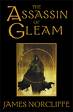
The Assassin of Gleam, James Norcliffe, 2006

THE ASSASSIN OF GLEAM James Norcliffe, Hazard Press, Christchurch, New Zealand, 2006, 207 pages, paperback, NZ$29.99
ISBN 1-877270-99-7

Deep and dark:
On a planet with two moons, the lost city of Gleam is ruled by the tyrant Markgrave. As the turn of the century approaches, his hereditary reign is threatened by the bubbling-up among his cowed subjects of a prophecy about a Maiden who will bring them freedom. This could have been just another cardboard fantasy cliché but instead James Norcliffe has breathed life into his characters and situations. The result is a skilfully told story, with a dark mood and a sense of urgency.

It is clear that a master storyteller is at work from the first sentence, where we read that Gleam’s streets are “gripped in a fist of darkness.”

Down these mean streets run the rash and impulsive student Tobias, his quieter, deeper sister Johanna and their Uncle Hugh, a musician. In most fantasies these three would become the unlikely liberators, but this novel is more sophisticated and the trio are running towards a grimmer and more convincing fate. Tobias is faced with the ultimate temptation: to choose “death over life and power over love.” These are terrible choices, and the decision Tobias makes has equally terrible ramifications.

It is not giving the plot away to say that The Assassin of Gleam is a novel about power, one that is extremely realistic about human nature and politics. As the tavern-keeper Mother Grayling warns, the ruler who replaces the Markgrave would be “no sunrise but another jackal who sooner or later would…bare his fangs.” Johanna suddenly finds herself at the centre of a complex struggle involving the mysterious Brotherhood, a group of sinister scholars, while Hugh’s only ally is Dragonet, a runaway jester. Meanwhile the Markgrave believes that to kill an idea, it first has to be made incarnate.

The bleak world of Gleam has the convincing quality of a complex dream. Even minor figures are well-drawn. Many of the characters have hidden depths and none are stereotypes. Their very surnames are reminders that Norcliffe is also a poet. His narrative achieves an almost mythic power, while the pace of the tale never flags. Small but important revelations keep occurring right to the last chapter. This is a masterly crafted and readable novel. The best news about this handsomely-produced volume, written while the author was Robert Burns Fellow at Otago University, is that while it has a perfectly satisfying conclusion, it also leaves the way open for a sequel.
Or a series.

Trevor Agnew

First published in The Press, Christchurch, New Zealand, on July 29 2006