Showing posts with label Tessa Duder. Show all posts

Tuesday, 17 September 2013


NZ Young People’s Books: Best of 2012
By Trevor Agnew 
Published in Your Weekend Magazine, (The Press, Christchurch, New Zealand, Nov 2012)  


Best Books for Kiwi Youngsters: 2012
Publishing trends 2012
 
By Trevor Agnew   

2012’s most heart-warming publishing event was the return of a once famous imprint. Whitcoulls, under its new ownership, has returned to publishing with a magnificent hardback anthology of New Zealand stories and poems, Read Me Another One, Please! selected by Belynda Smith. Authors include Margaret Mahy, Roger Hall, Joy Cowley and Bill Nagelkerke. The best story is Granny Alex, by Tessa Duder, where a young woman swimmer, training for the Olympics, is encouraged by her grandmother. Satisfyingly, Tessa Duder’s beloved classic Alex (1987) is being re-issued by Whitcoulls Classics.

The darkest aspect of 2012 was undoubtedly the death of Margaret Mahy, a brilliant writer, whose high level of creative genius remains unequalled. Margaret’s unique way with language can be sampled in the new paperback edition of her collected verse, The Word Witch, which has a CD of her reading a dozen of the poems.  

Meanwhile Margaret’s prolific output means that her titles continue to appear posthumously. Footsteps in the Fog is an atmospheric celebration of the senses, with a blind girl leading her siblings to safety through dense fog. Mr Whistler is a gleeful picture book about an absent-minded
dancer who mislays his train ticket and has to undress on the station platform to find it (much to the joy of young readers). Both these books are illustrated by Gavin Bishop. It has been an excellent year for Bishop, whose Counting the Stars: Four Maori Myths has just appeared in paperback, while his 1999 masterpiece, The House that Jack Built, has been re-issued in a sumptuous hardback, a reminder of just how important good illustration and book design are.

 In November 2012, the German firm, Bertelsmann, owner of Random House, took over the British firm Pearson, owner of the various Penguin imprints. The promise is that Random House and Penguin will retain their distinct editorial identities. The concern, however, is that as the big firms swallow each other up, fewer books for young people will be produced. Ray Turton, editor of Magpies magazine, which reviews Australian and New Zealand books for young people, feels that over recent years “big publishers don’t know where their industry is going. They’ve been running round like hens with their heads cut off.” Turton warns that large corporations will always concentrate on mass-market books with larger print runs. “Everyone wants the next Hunger Games or Harry Potter.”

New Zealand has a proud tradition of small publishing firms producing high quality books for the young.  In its thirty years of existence, the tiny Wellington publishing firm of Mallinson Rendell produced only about seven titles a year, but the remarkable quality of publisher Anne Mallinson’s judgement was reflected in book prizes and export orders.  When Mallinson Rendel closed its doors in 2009, its titles were purchased by Penguin. Lynley Dodd’s menagerie of cats and dogs thus migrated to Puffin, which has just issued the witty Slinky Malinki, Early Bird. Yet, even though the future of Hairy Maclary and his friends is now assured, would such a long-running series have been brought into existence and nurtured without the support of a visionary like Anne Mallinson?

Longacre Press, the small Dunedin publisher co-founded by Paula Boock, was another small firm that punched above its weight. Taken over by Random House in 2009, Longacre still appears as an imprint on novels like James Norcliffe’s The Magic Flute, a fantasy that pitches modern Kiwi kids into Arcadia. Another Longacre title is Kate De Goldi’s The ACB with Honora Lee, the superbly-presented story of a girl coming to terms with her grandmother’s dementia.

The good news is that new ‘little’ publishers keep popping up.  Several well-designed picture books have come from the Duck Creek Press, a branch of David Ling Publishing, including the stylish That Dog at the Beach by Janene Cooper and Evie Kemp (a sequel to their award-winning A Dog Like That).

Another recent arrival, Dreamboat Press, is a husband and wife operation, based on Waiheke Island. Mark and Rowan Sommerset have only produced five picture books so far but have already won awards. Their latest, I Love Lemonade, has the slightly naughty flavour that young readers adore.

All publishers need a point of difference to survive.  Wellington’s Gecko Press has concentrated on providing English language translations of award-winning foreign titles, both non-fiction, such as the French Small and Tall Tales of Extinct Animals, by Hélène Rajcak, and fiction, such as the hilarious Swedish illustrated story The Best Singer in the World by Ulf Nilsson.

 Huia Publishers focuses on Māori titles, and their young people’s books this year include such lively war biographies as Born to Fly (about Johnny Pohe) and Victory at Point 209 (Moana Ngarimu), both illustrated by Andrew Burdan in war-comic style.  Huia also a shrewdly reversed Gecko’s technique, by producing Te Haere ki te Rapu Pea, a Maori language version of Michael Rosen’s 1989 classic, We’re All Going on a Bear Hunt, evocatively illustrated by Helen Oxenbury.

Some publishers find that series help ensuring repeat custom. Little girls adore Elizabeth Pulford’s Littlest Angel series, where Lily Gets in a Pink Pickle is the sixth volume. Kyle Mewburn’s cheerfully anachronistic Dinosaur Rescue series reached Number 7 with Scuto-Stickysaurus. Meanwhile Chris Gurney’s up-dated fairy tale, The Frog Footy Player is the 14th in the Kiwi Corkers series.

Some publishers give books special features to encourage buyers. Jenny Cooper’s splendid picture book, Do Your Ears Hang Low?, includes a CD of the Topp Twins performing the song (as a sequel to the same team’s 2011 version of There’s a Hole in My Bucket). Pio Terei is the vocalist on the CD which comes with Stevie Mahardika’s If You’re a Kiwi and You Know It. Several books now offer stuffed toys, like Craig Smith’s Willbee the Bumblebee. The Wonky Donkey meanwhile goes one better; as well as a stuffed toy, it now offers a miracle of paper engineering, The House that Wonky Built. Junior engineers who enjoy the classic, The Little Yellow Digger by Betty and Alan Gilderdale, can now own a trace ‘n’ race excavator toy version, which comes complete with the book. There’s even The Little Yellow Digger Activity Book.

As the publishing market-place shrinks, many frustrated, would-be writers try printing and selling their own books. Some of their efforts are dire but a few are excellent, like Brent Leslie’s self-published Jock Logan and the Sea Devil, a vivid account of a lad’s seagoing encounter with Count von Luckner.  Craig (Wonky Donkey) Smith created his own company in Queenstown to publish Kaha the Kea, illustrated by Bruce Potter. Like many other publishers, Craig feels the need to bring electronic media and the printed page together. Thus purchasers of Kaha the Kea can also enjoy an animated version on their iPad or computer.

And which of this year’s books will the young readers of 2062 be reading with pleasure?  My pick is David Hill’s best novel yet, a powerful story of dissent and its consequences, My Brother’s War.  The year’s best picture book also deals with the First World War: Glyn Harper’s handsome and moving Le Quesnoy: the story of the town that New Zealand saved, illustrated by Jenny Cooper.

Trevor Agnew
November 2012  

Book list: The Best of 2012:


Le Quesnoy: the story of the town that New Zealand saved, Glyn Harper, ill Jenny Cooper, Scholastic, NZ$20
My Brother’s War, David Hill, Puffin, pb, NZ$19.99
 

The Top Two Dozen of 2012:

Slinky Malinki, Early Bird, Lynley Dodd, Puffin, hb, NZ$24.99

Mr Whistler, Margaret Mahy, ill Gavin Bishop, Gecko, hb, NZ$34.99

Kaha the Kea, Craig Smith, ill Bruce Potter, Craig Smith Publishing, pb, NZ$26

If You’re a Kiwi and You Know It, Stevie Mahardika, Scholastic, pb, NZ$21

The Little Yellow Digger Activity Book, Scholastic, pb, NZ$10

Do Your Ears Hang Low?, ill Jenny Cooper, Scholastic, pb, NZ$26

That Dog at the Beach, Janene Cooper, ill Evie Kemp, Duck Creek Press, hb, NZ$29.99

Te Haere ki te Rapu Pea, Michael Rosen, ill Helen Oxenbury, Huia Publishers, pb, NZ$20

 I Love Lemonade, Mark & Rowan Sommerset, Dreamboat Press, hb, NZ$29.99

The House that Wonky Built, ill Katz Cowley, Scholastic, hb, NZ$29

The Best Singer in the World, Ulf Nilsson, ill Eva Eriksson, Gecko, hb, NZ$34.99; pb, NZ$19.99

The Littlest Angel 6: Lily Gets in a Pink Pickle, Elizabth Pulford, Scholastic pb, NZ$12

Dinosaur Rescue 7: Scuto-Stickysaurus, Kyle Mewburn, Scholastic, pb, NZ$12

The Frog Footy Player, Chris Gurney, ill John Bennett, Scholastic, hb, NZ$18.50

Footsteps Through the Fog, Margaret Mahy, ill Gavin Bishop, Puffin, pb, NZ$20

Small and Tall Tales of Extinct Animals, Hélène Rajcak & Damien Laverdunt, Gecko, hb, NZ$37

The Word Witch, Margaret Mahy, ill. David Elliot, HarperCollins, pb, NZ$40

Read Me Another One, Please! selected by Belynda Smith & Dorothy Dudek Vinicombe, Whitcoulls, hb, NZ$29.99

Born to Fly, Julian Arahanga, ill Andrew Burdan, Huia, pb, NZ$25

Victory at Point 209, Kawata Teepa, ill Andrew Burdan, Huia, pb, NZ$25

Jock Logan and the Sea Devil, Brent Leslie, Brent Leslie Books, pb, NZ$20

The ACB with Honora Lee, Kate De Goldi, Longacre [Random House], hb, $34.99

Alex, Tessa Duder, Whitcoulls Classic, pb, NZ$19.99

The Magic Flute, James Norcliffe, Longacre [Random House], pb, NZ$19.99

Spring 2012 New Zealand Picture Books
By Trevor Agnew

Mister Whistler  Margaret Mahy, ill. Gavin Bishop, Gecko, 32 pp, hb, NZ$34.99
ISBN 978-1-877467-91-2

The Word Witch  Margaret Mahy, ed Tessa Duder, ill. David Elliot, HarperCollins, 168 pp, pb, NZ$39.99  ISBN 978-1-77554-001-4

The Man from the Land of Fandango  Margaret Mahy, ill. Polly Dunbar, Frances Lincoln, 28pp, hb, NZ$29.99  ISBN 978-1-84780-220-0 
 
Mangu & Ma  Megan Bowers-Vette, HarperCollins, 18pp, board book, NZ$14.99
ISBN 978-1-86950-995-8

ABC, Colours, Counting, Little Fronds: books for kiwi babies  Matthew Williamson, ill. Fraser Williamson, Puffin NZ, 20pp, board books, NZ$12.99
ISBN 978-0-143-50555-6
ISBN 978-0-143-50554-9
ISBN 978-0-143-50556-3

Kiwi Play With Me: A Kiwi Count-Along Book  Helen Taylor, Puffin, 32pp, pb, NZ$19.99
ISBN 978-0-143-5049-5
 
Kaha the Kea  Craig Smith, ill. Bruce Potter, Craig Smith Publishing [PO Box 330, Queenstown 9348], 32 pages, pb, NZ$26.    ISBN 978-0-473-21350-3

Slinky Malinki, Early Bird  Lynley Dodd, Puffin, 32 pages, hb, NZ$24.99
ISBN 978-0-149350546-4

The Frog Footy Player  Chris Gurney, ill. John Bennett, Scholastic, 24pp
hb, NZ$18.50, ISBN 978-1-77543-057-5

The Three Little Pigs  Roger Hall, ill. Errol McLeary, Scholastic, 48 pages, pb, NZ$19.50
ISBN 978-1-77543-095-7

 Born to Fly    Julian Arahanga, ill. Andrew Burdan, Huia, 40pp, Pb, NZ$25
ISBN 978-1-77550-004-9

Victory at Point 209  Kawata Teepa, ill. Andrew Burdan, Huia, 40pp, pb, NZ$25
ISBN 978-1-77550-005-6
 

New Zealand Picture Books for the Young of All Ages
By Trevor Agnew

 In the year Margaret Mahy was born (1936), only four books for young readers were published in New Zealand.  During her lifetime she saw a marvellous blossoming of locally-produced children’s books, much of it due to her inspiration and effort. In the literal sense Margaret Mahy died this year (2012) but, for her readers, she will be alive whenever one of her books is read. Meanwhile, because of the mechanics of publishing, new books by Margaret Mahy will continue to arrive for some time.

Margaret Mahy saw the proofs of Mr Whistler before she died, and they were also on display at her memorial service, where her family insisted that Gavin Bishop do a “product placement” for the forthcoming book. Having a picture book promoted during a funeral was a magnificently Mahyan moment, relished by all present.  

Mr Whistler is the story of a young man with such music in his soul that he dances in his sleep and dances as he dresses in the morning. He also dances while he waits for his train but then he finds he has mislaid his ticket. Young eyes will soon spot the missing ticket but Mr Whistler removes his clothes, item by item, searching for it. “Suddenly people were clapping and cheering. ‘What dancing!’ they cried. ‘What energy! What grace!’” Mr Whistler has more misadventures with his ticket before the train leaves but, thanks to his skilful dancing, all ends well.

Gavin Bishop’s watercolour illustrations add an extra dimension to the story. He has recreated the railways (and men’s fashions) of the early 1950s with loving attention to detail. Mr Whistler’s graceful dance movements reflect the music that twines across every page. The last picture has a bonus for sharp-eyed readers.

The nicest thing ever to happen in Ashburton was the display of David Elliot’s brilliant paintings for The Word Witch, the collection of Margaret Mahy’s poems, edited by Tessa Duder, which has just been re-issued in paperback. This new edition contains a beautifully recorded CD of Margaret reading such favourites as Bubble Trouble and Down the Back of the Chair. Both of these poems have been published as picture books in their own right, illustrated by Polly Dunbar There are plenty more in this rich collection which may yet appear as books.

In fact, The Man from the Land of Fandango is just such a picture book, setting Margaret Mahy’s bouncy words to Polly Dunbar’s equally lively pictures. “Oh whenever they dance in Fandango, the bears and the bison join in, and baboons on bassoons make a musical sound.”  Artists can add a great deal to the stories they illustrate and Polly Dunbar has provided a marvellous framing device for this book. Two children draw their own picture of Mr Fandango, who then comes to life with his light-bulb body, rosy cheeks and stick-like feet. He is a child’s illustration who is free to dance on ceilings and walls, then bounce with kangaroos. The result is a gleeful celebration of the magic of Margaret Mahy’s verse.

Picture books are for all ages to enjoy.  Mangu & Ma [black & white] is a collection of sharply-contrasted black-and-white photos by Megan Bowers-Vette. This ‘first-focus’ board-book, intended for little babies as they develop their focussing skills, has sharp images of familiar objects: buttons, clothes pegs, balls, shells, flowers and, of course, a baby.

A trilogy of board books for slightly older Kiwis to get their teeth into has been written by Matthew Williamson and illustrated by his brother, Fraser Williamson, (known to children for his book and School Journal illustrations and to adults for his milk advertisements). Counting matches numbers with New Zealand birds, from ‘one midnight morepork’ to ‘ten prancing Pukeko.’ ABC provides 26 examples of familiar Kiwi objects including ‘L is for Lolly’ to ‘Q is for quadbike.’ (My favourite is ‘F is for fish. This one is chocolate.’) Colours also uses local examples, so flax is green, pohutukawa is red, paua is purple and you know what is black. Fraser Williamson’s artwork is a delight, and the board books are durable enough to survive heavy use.

Canterbury author and artist Helen Taylor has created a magnificent cumulative story in Kiwi Play With Me. Little kiwi seeks friends to play with and he is soon joined by one kea, two bats, three frogs and so on up to ten snails. Each creature is beautifully delineated and coloured. The concluding picture with all 56 playmates present is a joyous celebration of our wildlife.

Kaha the Kea is a story told in verse (and in song in an attached CD) by Craig Smith (of Wonky Donkey fame) about his youthful encounters with an audacious kea at Arthur’s Pass. Kaha mauls Dad’s Holden Torana and steals Mum’s earrings. Can nothing stop the cheeky kea? Bruce Potter’s splendid colour illustrations provide a very funny kea-stopping conclusion. As well as the CD, there’s also a link to Craig’s kea conservation message on YouTube and an interactive e-book for your iPad.

Another New Zealand creature famed for his impudence is Lynley Dodd’s famous prima donna puss. In Slinky Maliki, Early Bird, the self-centred feline makes an early morning visit to every member of the household. ‘He purred in their ears and he pounced on their toes.’ Lynley Dodd’s witty verse is as skilful as her colour paintings of the grumbling family being roused. The conclusion is irresistibly funny: ‘Slinky Malinki went straight back to bed.’ 

Scholastic’s Kiwi Corkers series of ten poetic parodies of well-known fairy stories is the best picture book value around. The eleventh in the series is by talented wordsmith Chris Gurney who, in The Frog Footy Player, has created a Kiwi version of the classic The Frog Prince.  When Kiri kicks her beloved autographed football into the creek, guess who rescues it in return for a promise of chocolate fish and chance to watch TV? The moral is sound, Chris Gurney’s verses are bouncy and John Bennett’s illustrations capture the fun of the tale.

Roger Hall provides a valuable service with his version of The Three Little Pigs. Not only does he provide an updated story (Mother Pig tosses her three lazy sons out so she can go on a world cruise) but there is a bonus play-script, complete with props list and poster. Errol McLeary’s cartoons look delicious and the wolf, a smooth ‘meal estate agent,’ has all the best lines.

Finally Huia Publishers are offering two picture books ideal for boys who think they don’t like reading let alone picture books. Call them graphic novels, call them manga, call them comics; it doesn’t matter. Get those lads a copy of Julian Arahanga’s Born to Fly and Kawata Teepa’s Victory at Point 209 and even if they’re illiterate they’ll learn how to read just to find out what’s going on in these illustrated biographies of war heroes, Squadron Leader Porokoru ‘John’ Pohe and Lieutenant Moana Ngarimu. Andrew Burdan has illustrated both books in the style of the old Commando Comics (currently being reprinted) complete with speech balloons, well-researched uniforms and equipment, dramatic sound effects (Vrowwwl!, Boooom! Ratatatatatat!) and lively action.
Born to Fly details Pohe’s inspirational career as a bomber pilot and one of the 77 involved in the ‘Great Escape’ from Stalag Luft III.  Born to Fly tells how Ngarimu won his posthumous VC in the North African desert. Both men died too young, and these books will help bring them alive for a new generation of New Zealanders. 

That’s fourteen New Zealand titles selected from the picture books alone. Margaret Mahy would have been proud.


Trevor Agnew
Spring 2012
 

 First published in Your Weekend Magazine, The Press, Christchurch, New Zealand


Wednesday, 1 August 2012

Margaret Mahy: A Memorial Celebration of Her Life, Christchurch 1st August 2012

Celebration of Margaret Mahy’s Life
Geo Dome, Hagley Park, Christchurch 1 August 2012

The celebration was held on a cold winter’s day in a large geodesic dome in Hagley, an unlikely (but comfortable) setting which would have greatly amused Margaret. I arrived very early with my daughter Ruth, which meant that we not only got good seats but also heard the school choirs singing some of Margaret’s poems beautifully, at their final rehearsal.
Soon the tent was full and we had to move our chairs to let a man in a wheelchair past. On his lap he held a marvellous box, about the size of a large shoe-box, with pictures from some of Margaret’s books pasted on it. We recognised the lion and Norbert the great white man-eating shark. “What a fabulous box,” Ruth said, and the man nodded and wheeled on up the aisle.

Louise Deans welcomed everyone, “Aren’t we lucky that we had Margaret Mahy living among us, and we all knew her and loved her?” We all sang Blake’s Jerusalem.
Tessa Duder gave a marvellous, witty, succinct summary of Margaret’s life (beginning ‘Once upon a time…’) and moved many to tears by concluding with a reading of Margaret’s poem When I Grow Old.

Two of Margaret’s older grandchildren, Poppy and Alice, spoke and read from Notes from a Bag Lady. They noted that “Margaret often broke out in a can-can in the school playground.” One read from a little boy’s sympathy card on Margaret’s death: “No more summery Saturday mornings for you, my friend.”

Jack Lasenby once said that Wonderful Me by Margaret Mahy was one of the most perfect poems ever written. The highlight of the service was Margaret’s granddaughters, the twins Julia and Biddy, giving a perfect reading of Wonderful Me.

Rosie Belton gave a tribute to Margaret on behalf of her fellow Governors Bay residents. She spoke of Margaret’s part in the life of the bay, as well as the walks, the scenery and the filming of Kaitangata Twitch, “where fact and fiction merged and Margaret watched her characters come to life – the wonder of it all.” Rosie mentioned Hallowe’en at Governors Bay, when Margaret would dress up as a witch and give the visiting children gifts. “And a nip for their parents.”
Today the school sign at Governors Bay reads ‘Thanks Margaret. Rest in peace.’

(The people of Governors Bay made and served the afternoon tea, which included splendid club sandwiches, afghans, lemon curds and Nenisch tarts. One lady remarked she was thinking of moving to Governors Bay just for the food.)

Rosie recounted an exchange between Margaret and a granddaughter as they drove over the Port Hills. A serious question was seriously considered and seriously answered.
Lily: “Margaret, have you read all of your books?”
Margaret: “Well, Lily, I have read all of my books, and some of them do take quite a time to read.”

Lorain Day, the publisher, said, “My friend Margaret was, quite simply, a genius…a genius real and true.” She gave the example of a friend saying, “That’s a Margaret Mahy sort of word.” She told of taking Margaret to Weta Workshops to meet Sir Richard Taylor, with whom she got on very well, and with the Weta designers who thanked Margaret for showing that fantasy was valid and imagination was to be treasured.

Gavin Bishop, slightly embarrassed at having been described by Margaret as “a Sicilian bandit in a Savile Row suit,” read from the The Pirate’s Mixed-Up Voyage. “Who cares if we can’t read – we’re pirates, not pedants.” He pointed out the cute little touches, such as “a seedy-looking little business called Rent-a-Librarian.”

Kate di Goldi spoke of re-reading many of Margaret’s books in preparation for a filmed interview. “For Margaret, language was an intoxicant, a spell, an enchantment. It was her food – a special nourishment.” Kate spoke of Bubble Trouble as a metaphor for Margaret’s life, “wafting along, creating wondrous merry hell” and drawing us out of our mundane lives to enjoy the fun.
“She dug around in her consciousness and pulled amazing things out, much as Dad does down the back of the chair.”
They then screened Yvonne Mackay’s film of Margaret reading Down the Back of the Chair to the twins, with animated additions (lion, snake, elephant, taxi) by Euan Frizzell.
A children’s choir then sang some of Margaret’s poems, set to music by Philip Norman. It was beautifully done.

Sue Colyer and Louise Easter, wearing multi-hued wigs, spoke lovingly of Margaret’s time with them at the School Library Service of the National Library and at Canterbury Public Library. “Margaret would sing sea-shanties as she shelved. Sometimes she would dance a hornpipe.” Her lunch-time ‘power-naps’ were remembered, as well as her work as Children’s Librarian. Christchurch City Libraries’ reference collection of New Zealand children’s books is named the Margaret Mahy Collection, in her honour.

A recording made by Yvonne Mackay of Margaret reading her poem Ghosts was played – the same recording broadcast as part of the tribute by Tessa Duder and John McIntyre on Radio NZ National the day after Margaret’s death. Choir boys sang Pie Jesu beautifully as Margaret’s family left the tent. With them they took Margaret’s ashes, which had been in the tent with them throughout the celebration.

Ruth and I were flabbergasted to realise that the lovely box we had seen carried in, was in fact the box holding Margaret’s ashes. It was a perfect Margaret Mahy ending to a perfect Margaret Mahy celebration.

Trevor Agnew
2 August 2012

Friday, 21 March 2008

Carpet of Dreams

Carpet of Dreams Tessa Duder, ill. Mark Wilson, 34 pages, Angus & Robertson [HarperCollins], hardback $26.99 ISBN 0-207-19999-X

Carpet of Dreams is Tessa Duder’s first picture book. Sara is fascinated by an old carpet at her grandmother’s home. Each night she dreams of one of the magnificent animals woven into it and the young dark-haired girl who wove the carpet. The dolphin, camel, donkey and lion each tell Sara their story by night, and during the day her grandmother answers her questions although, after the elephant dream, she is a little embarrassed about her ivory piano keys. “‘Well,’ said Sara, ‘We could just thank the elephant…and play our duet.’” At the end of the story Sara makes a charming discovery about her grandmother, which many readers will already have suspected. Mark Wilson’s richly coloured double-page paintings capture the excitement and exotic appeal of this wonderful story.

Trevor Agnew

This review appeared in The Press, Christchurch, on 27 January 2007.

Adventure Novels for Young Readers

And Did Those Feet… Ted Dawe, Longacre Press, 192 pages, paperback, NZ$18.99
ISN 1-877361-49-6
Too Close to the Wind, and other stories Tessa Duder, HarperCollins, 169 pages, paperback, NZ$16.99 ISBN 1-86950-608-1
Where Cuckoos Call Des Hunt, HarperCollins, 175 pages, paperback, NZ$16.99
ISBN 1-86950-607-0
The Amazing Adventures of Razza the Rat Witi Ihimaera, ill. Astrid Matijasevich, 54 pages, paperback, NZ$19.99
ISBN 1-86978-004-3

In the same month in 2007 that Investigate magazine claimed (falsely) that there are no healthy adventure novels for young adults in New Zealand, I received eight for review. Here are the first four.

When his mother dies and his father fails to cope, Sandy is sent to live with his Uncle Frank and Aunt Lorna on their Taranaki farm. In the lively first-person narrative of And Did Those Feet…, Sandy adjusts to the different routine of country life, pulling turnips, milking, and befriending a pig. Sandy’s acceptance of country life is humorously drawn but a more interesting issue lies at the heart of this novel. Uncle Frank is no ordinary farmer; he has developed a philosophy of life based on the writings of William Blake, which at first baffles and then intrigues Sandy. At school, Sandy is viewed with suspicion as a ‘cultie’ but finds acceptance and fulfilment during a traumatic class camping trip on Mount Taranaki. This is a strikingly original novel with well-drawn and likeable characters. As well as winning prizes, it is also likely to have young readers seeking more information about William Blake.

Des Hunt’s novels follow an enjoyable pattern where a young person becomes aware of the importance of nature. On his twelfth birthday Ben Mansfield finds a Shining cuckoo chick and tries to raise it, in Where Cuckoos Call. Ben has no illusions. “Cuckoos are parasites,” he declares but he soon has Bigmouth thriving. The rest of Ben’s life is not going as well. His father is ill and the family’s Coromandel Peninsula farm is being developed into a coastal marina.
A keen birdwatcher, Ben tries to protect the local coastal birds, erecting fences and signs, but hostile trail-bikers destroy some nesting sites. When all seems lost Ben receives a message from Vanuatu: Bigmouth has migrated there. The unexpected events that follow, including Cyclone Alex, create a roller-coaster of surprises for Ben and his readers. A well-paced, often exciting novel.

Environmentalists were depressed that a monitored rat named Razza had swum half a kilometre to Otata Island, but Witi Ihimaera scented a story. The Amazing Adventures of Razza the Rat follows Razza as he defies his tribal elders and heads off on the ultimate OE. Razza swims and flies (on an albatross) to several world capitals, survives a tsunami and collects a Mousehood from the Queen on the way. By the end, Razza has his beady eye on even higher goals: “one long step forward for mousekind.” Ihimaera uses a frisky mixture of poetry and prose to produce a light yarn for young readers. Astrid Matijasevich’s colourful cartoon illustrations add to the genial mood.

Tessa Duder has been publishing stories for more than quarter of a century and Too Close to the Wind brings together ten of the best. Duder’s sailing and swimming interests predominate, especially in my favourite, the very funny Freddie Bone, where the main character’s plump build proves an advantage in a midwinter endurance race. His wily sponsor’s horror as dogged Freddie reaches 109 laps for $9500 is well portrayed. Other stories have young people recognising their abilities in everything from making music to telling stories. One of the several boating stories contains a good joke in its title; when big-headed Robert goes over the side, Robin calls ‘Person Overboard’ because ‘you’re no man.’ Fresh and lively reading for a range of ages.

Trevor Agnew

This review first appeared in The Press, Christchurch, New Zealand on 10th March 2007.

Saturday, 25 November 2006

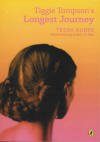
Tiggie Tompson's Longest Journey, Tessa Duder, 2003


TIGGIE TOMPSON’S LONGEST JOURNEY Tessa Duder, Puffin, Auckland, New Zealand, 2003, 224 pages, paperback, $16.95. ISBN 0-14-331812-8.

Readers will gain an insight into eating disorders from Tessa Duder’s The Tiggie Tompson Show, but they will learn much more about teenagers. Tessa Duder is superb at letting us into her characters’ heads, so that we can see how major tensions can be created by relatively minor incidents. In the first two novels Tiggie lost weight and gained self-confidence, independence and a good acting role .
Now in Tiggie Tompson’s Longest Journey, filming has begun but she is distracted by tensions on set, an anorexic friend runs away and Tiggie’s glamorous broadcaster mother is unexpectedly pregnant. Tiggie copes well (mostly), comes of age in her relationships with others, conquers her fears and ultimately achieves success. The studio atmosphere is convincing and the plot gripping. This could be the final volume but Tiggie now has a contract to write three novels and some unfinished business to sort out, including her relationship with her estranged grandfather, so I predict a quartet.

Trevor Agnew

First published in The Press, Christchurch, New Zealand on March 6th 2004

Saturday, 18 November 2006

In Search of Elisa Marchetti, Tessa Duder, 2002


In Search of Elisa Marchetti: a writer’s search for her Italian family, by Tessa Duder, Penguin, Auckland, New Zealand, paperback, 2002, 220 pages, NZ$29.95.

In Search of Elisa Marchetti begins with a young Italian wife standing with her baby at the San Marco gates of the Livorno railway station in 1875. ‘Elisa clutched Geremia tightly as the crowds and noise continued to swell around her….The travellers were easy to spot, They were the shabbily dressed people with bags, holding children, hugging their families, all weeping or stoney-faced

It is a dramatic and convincing chapter, not at all weakened by Duder’s later revelation that it is ‘forgive me, a little indulgence – a novelist’s five-finger exercise.’
Actually it is a strength of this account of her search for her great-grandparents, Nat and Elisa Lenzini, that Tessa Duder is a skilled journalist and talented storyteller. Where a conventional family history would have trudged through chronology and documentation, she uses the novelist’s varying viewpoints and slips smoothly through time to develop aspects that interest her.
I won’t reveal what she found, because that would spoil some of the delight of discovery which she shares with the reader. Sufficient to say that even if she had found nothing at all, this book would have been worth reading for its picture of an Italian port and its people.

Tessa Duder recreates Livorno for us. She draws in such visitors as Smollett and Shelley, Byron and Browning, quotes Dickens and disagrees strongly with Henry James. We enter churches and libraries, newsrooms and villas, see pottery being made in a form unchanged over the centuries and attend the opera La Fanciulla del West by Puccini, ‘a man who lived just up the road’. Stereotypes are rejected: the Livornese don’t buy their vegetables in open-air stalls; they go to supermarkets. Parallels with Auckland – another slandered maritime settlement – help us to recognise Livorno (known to some as Leghorn) as one of our many Kiwi homelands.

We are all familiar with Wellington’s Italian fishing community, but this book draws our attention to the four shiploads of Italian settlers who came in 1875 and 1876. Many were from Livorno, and unrealistic expectations on both sides led to disappointment and rejection. Many of these migrants, however, stayed on and I am certain their descendants will find inspiration in Duder’s search for her Italian roots.

Engagingly, Duder admits she began her quest by doing all the wrong things, and ignoring Rule 1. [Rule 1: Start research at your public library.] This charming frankness is what raises her book above all those dusty volumes of family history. The Lenzini family history may be patchy, but it is also a great story well told. Its mixture of suffering, loneliness and family warmth will be widely appreciated and recognised.

Trevor Agnew

First published in the Press, Christchurch, New Zealand on November 2nd 2002.

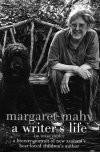
Margaret Mahy: A Writer's Life, Tessa Duder, 2005


MARGARET MAHY: A WRITER’S LIFE Tessa Duder, HarperCollins, Auckland, New Zealand, 2005, 336 pages paperback, NZ$39.99.
ISBN 1-869540-485-2

Literary Lion Lionised

Forty years ago the New Zealand School Journal published A Lion in the Meadow, by an “impecunious but determined” writer, Margaret Mahy. No story-teller, no matter how brave or fantastical, would have dared make up the tale of how this story got to New York and inspired wealthy publisher Helen Hoke Watts to issue a five book contract and then sweep dramatically into Governors Bay with thirteen suitcases. Like the editor of the School Journal, Mrs Watts had recognised a writer of rare qualities, and was determined to share her shining talent with the world.

Tessa Duder calls her book “a writer’s life” because Mahy preferred her not to go “into a lot of more personal detail”. When I asked Margaret Mahy if, as a busy writer, she had any other life, she responded that, of course she had her family life, and then to my delight added, “And there are all sorts of dramas in a family life.” She told one of her most celebrated family stories, when the family car threatened to erupt into flames, calling out to her fleeing daughters, “Look on this as an adventure.”
Duder tells the smouldering car story twice, to illustrate different points. While Duder has respected Mahy’s privacy, there are nevertheless memorable images of her personal life in this book. There is a moving sketch of her returning home, exhausted from the day’s work, to face the challenge of caring for her children and writing into the early hours. “I’d get off the bus at night and immediately start weeping as I walked towards home.”
In true Mahy fashion, there are lovely anecdotes of how Alzheimer’s Disease affected her Aunt Francie, whose spirit is immortalised in Memory. They capture the humour but do not attempt to hide the strain of the situation.
Everyone has their own favourite Mahy story. I’m sorry we don’t have her tale of how M.K. Joseph, her English lecturer, urged her to try Tolkien, with the result that she purchased the Lord of the Rings rather than a pair of shoes.

Her later fame – a letter from Russell Hoban addressed simply to ‘Margaret Mahy, Christchurch, New Zealand’ was duly delivered – is richly deserved. As well as analysing and assessing Mahy’s work, Duder has created a more complex and fascinating portrait than the stereotype of the literary librarian with the green wig. Of the multifarious Margaret Mahys, Duder has wisely concentrated on introducing only five to her readers: The Young Philosopher, The Apprentice Writer, The Picture Book Writer, The Full-time Novelist and The Doctor of Letters. Duder also presents cameos of Mahy addressing different audiences, from large international reading conventions to a dozen students in a workshop, with wit and eloquence.

While Margaret Mahy may protest at being compared to Janet Frame, it is indisputable that she is a writer of genius, who has indeed raised language to ‘an exciting art-form’. She writes stories that involve and change readers. She is taken seriously in literary circles, and her writings are studied in depth. Critics acknowledge her “interwoven levels of complexity”.

This biography is able to be enjoyed by the general reader but will also serve as a valuable guide to Mahy’s work for readers and a chart for serious students. If this book had an index, it would be perfect

Duder wisely quotes lavishly from Mahy’s superb speeches and essays. Each passage reflects Mahy’s ability to unfold and display what Duder identifies as “the opposing concepts of reality and illusion, truth and imagination, the fabulous in the ordinary, the fantastic in the domestic.”

Duder argues that “as a serious novelist, essayist and thinker, Margaret is much underrated in her own country”, noting she is still being slighted as “only a children’s writer…” There is an additional problem. In her recent elegant and informed Listener essay on the writings of Jack Lasenby (her former School Journal editor), Mahy writes: “Any New Zealand writer for children knows that stories with a strong New Zealand flavour are disadvantaged when it comes to international publishing.” This is a bitter but unavoidable fact, one she has experienced herself; pikelets, scones and steamed puddings were all excised from Jam. Ironically, some nitpicking New Zealanders were complaining that the lion should have been in a paddock, not a meadow.

It is an excellent time to celebrate our national treasure. Margaret Mahy has now entered her 70th year, and her 45th year of writing. This rich biography (which needs two pages just to list her main Awards and Honours, including an amazing two Carnegie Medals and six Esther Glen Medals) and the forthcoming major collection of critical essays, Marvellous Codes: The Fiction of Margaret Mahy, are only two aspects of the celebration. The joint novel and television series of Maddigan’s Fantasia are on the slipways, and another honorary doctorate has been conferred. Even better, A Lion in the Meadow is being reprinted. Mahy has a special affection for this, “the first story of mine that I ever saw turned into a book”.

Best of all Mahy is warning, “I haven’t finished with the lion and some day he may really roar.”

Trevor Agnew

First published in The Press, Christchurch, on May 21st 2005